Cost Estimator - Updated pricing behavior

This forum hasn't seen activity in a while, so lets blow a little dust off, shall we?

A recent conversation between my pre-sales team and myself led us to something we weren't sure about, and seemed like a good place to start asking questions here!

If i generated a cost estimate say, a year ago (December of 24), save it in my NMM instance and then load it today, does it automatically refresh pricing for the selected region before showing me the estimate and resultant pricing/costs?

If no - what do we need to trigger to make that happen (I'm pretty sure the answer is yes) - I'm thinking a region change and back would do it.

If yes - does this make sense?   Our use case below:


We generate estimates in NMM, then plug key data points into our internal pricing tools to generate the final pricing, line items, etc, for submission with a proposal.    We keep the NMM estimates in NMM itself because they are a fantastic reference point when we need to change something for a customer.   We can see what was originally proposed and resulting costs, then make our changes (and then plug the new data into our tooling to get the price to the customer).     If, between December '24 and today, the pricing changes - we lose the ability to see what the old pricing was, and that reference point.

Admittedly, to date, we haven't had this be a ‘problem’ - but several of us agreed that having the ability to see the static data from a year or two ago would be valuable.     

So - I'm asking about the exact behavior now, before I go and submit a feature request to be able to avoid the automatic pricing refresh (assuming it makes sense after some further discussion)


Thoughts?

0

Comments (5 comments)

0
Avatar
Dave Stephenson

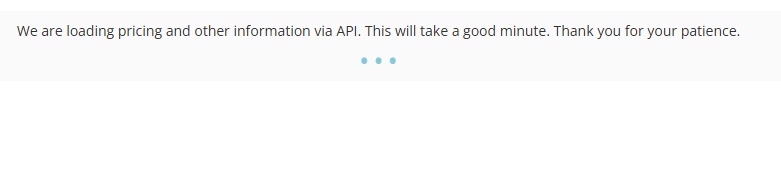
As far as I've seen it, the API refreshes the cost estimate each time it is loaded (see screenshot below).
Typically, that's what you want so you're quoting the latest price available to make it as close to accurate as possible.

However, I can think of a few different ways to do what you're wanting.
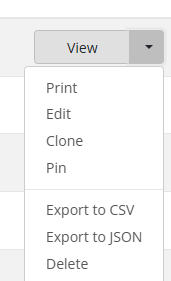
In the action menu, you can choose to Print, Export, or Clone the estimate as a way to pseudo archive it.


Another way would be to utilize the Estimated vs Deployed report and then use that as your comparison.


If you're feeling extra fancy, you could use the API to keep an archive of all of your estimates and then tie into the Azure Bill to compare in real-ish time to help you know if/when someone is using the environment more than you originally estimated so you can address it before you lose your margin.


Does that help/make sense or do you see needing the “Lock Estimate Pricing Button” being needed? 🤔

0
Avatar
John Tokash

Dave,


Thank you for the detailed response, always appreciated.   This confirms, without talking to product directly exactly what I expected.   When the page loads, if the region pricing data is outdated, its going to refresh and automagically show the latest pricing.   I think at this stage, it is a nice to have the ability to stop it from updating that, but I want to discuss with our pre-sales team on the topic.

I think I like the idea of using the API to export them, twould be easy to throw them in a storage account.   However, being in JSON format isn't ideal, I think there is some creativity that could be had to make it more readable for sales folks.


Now if we could just get some RBAC on the API, we'd be set to go.   


Thank you again Dave, as always, appreciated!

0
Avatar
Dave Stephenson

You're very welcome, John 🙂

I agree. JSON isn't exactly a “user-friendly format”, but if that's ultimately what you need to do, you could possibly use PowerBI (or another analytics tool) to put the info in a format that's easily digestible by your team. Although, if that's what they're needing, the PDF might be the better option.

As far as the RBAC on the NMM API – Nerdio Help Center feature, sadly, it hasn't gotten a lot of “love”, yet, from other partners.😢
That being said, our team recently updated the NMM PowerShell Module and introduced “Hidden API” documentation.
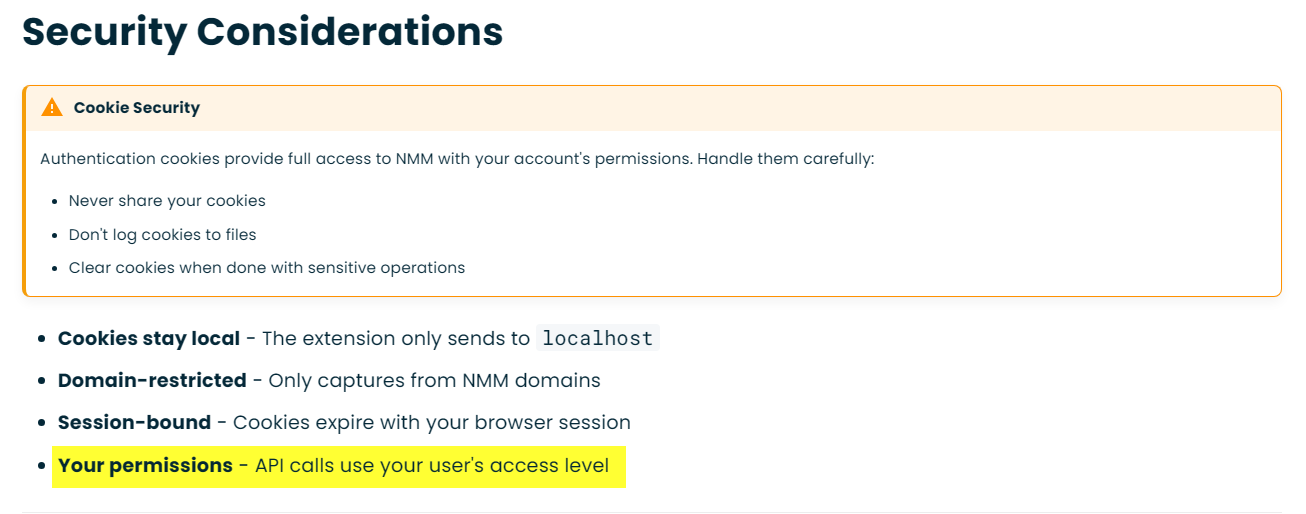
It's very much a “Use at your own risk” type of thing but has the benefit of using the same user-level permissions that are assigned by your NMM User Role.

I know, it's just another rabbit hole to go down, but I thought you might appreciate the option. 🤓


0
Avatar
John Tokash

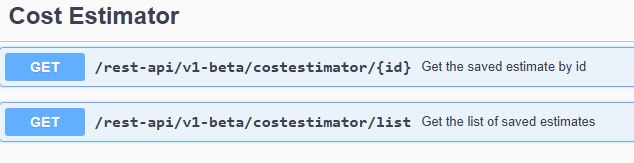
Dave Stephenson  - Thank you for the update.   At least according to swagger, the API doesn't allow for an export to PDF (that would be the quick and easy option) - but I think that would complicate the process further, having to then park the file in script, rather than handling a text response in json format.    Not the end of the world.

Now that is a good point and I hadn't considered that on the Powershell module, while as you say, at our own risk, and our mileage may vary, might be worth exploring a bit better.

That said - in todays zero trust centric world, I am genuinely surprised that the RBAC roles on the module don't spark interest.   In my use case, also with the estimator, I want to be able to pull data from a cost estimate straight into an excel spreadsheet (or similar tool), and I can do that with an API call, but I surely don't want to give an excel spreadsheet a tool that has full access to do everything the API can do :-).   This thought conversation gives me an idea I will put into the feature request commentary, and maybe it sparks more interest.


0
Avatar
Dave Stephenson

You're very welcome, John 🙂.

You're also right about the API/PDF options. We don't currently offer that functionality, but it's possible it could be added in the future. And, I fully agree with your “Zero Trust” comments. Getting to RBAC-level permissions for API calls is a needed change.

Please sign in to leave a comment.